

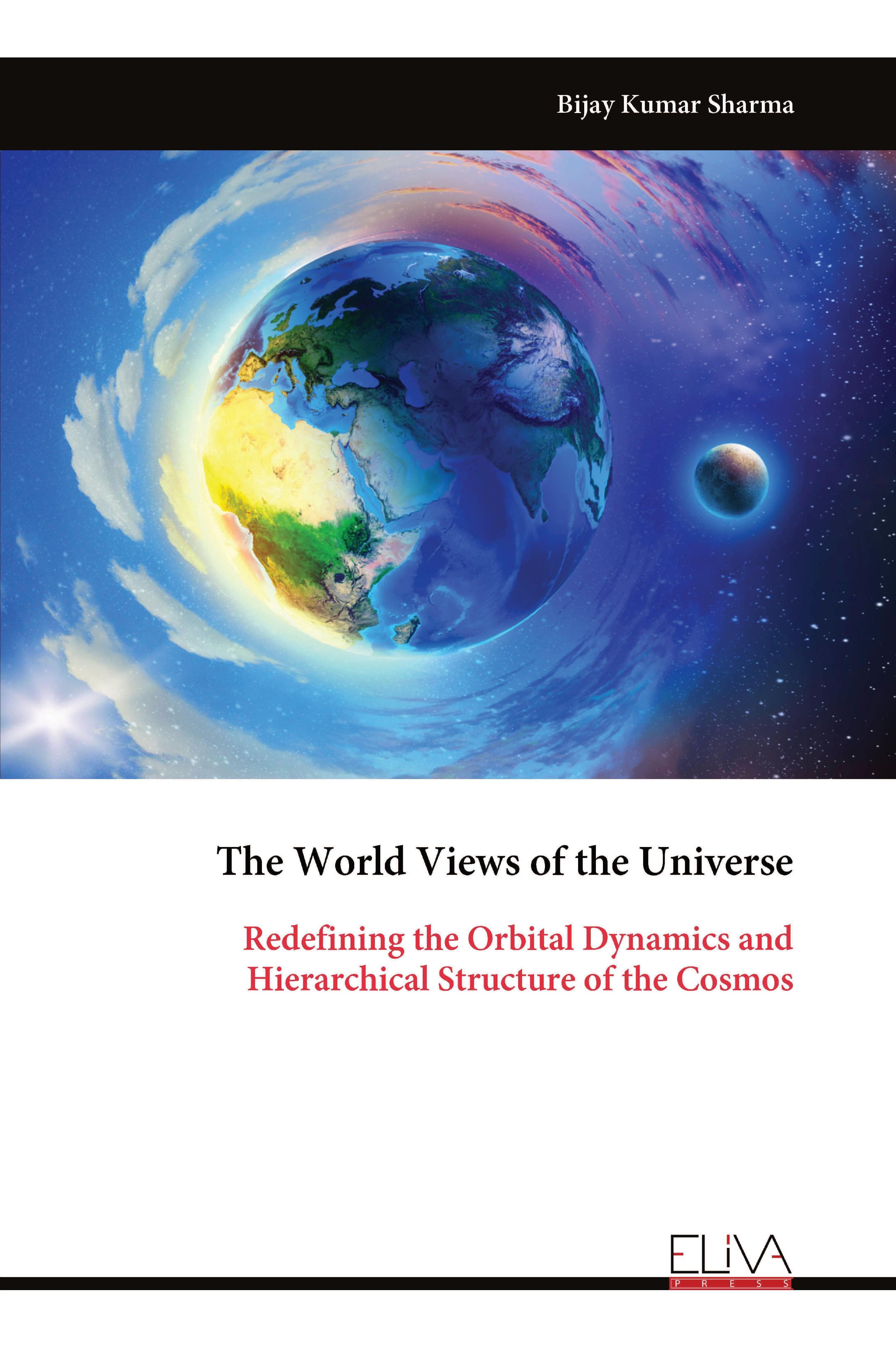
The World Views of the Universe
$ 49.5
Description
The World Views of the Universe presents an exploration of how humanity's understanding of the Universe has evolved—from the ancient geocentric worldview, through the Copernican heliocentric framework, to a proposed Primary-Centric Framework. The book examines the orbital architecture of cosmological systems from a primary-centric perspective. It introduces two equilibrium, non-dissipative orbital configurations—the Inner and Outer Clarke's Orbits—and investigates how the mass ratio between a secondary and its primary determines the possible orbital evolution and long-term stability of these systems. The framework provides a physical interpretation of inward and outward orbital migration, including the possible destruction of a secondary within the Roche limit and the formation of rings around the primary. At the heart of the book is the Author Conjecture: every cosmological subsystem possesses a characteristic primary component that anchors the system and determines the stable equilibrium orbits of its secondary components. The proposed hierarchy extends from planet–satellite systems, to stellar planetary systems, galaxies, galaxy clusters, and superclusters, suggesting a primary-centered architecture that may ultimately extend across the cosmic web. The book further discusses the possible significance of over-massive supermassive black holes observed in several galaxies and considers how these observations may lend support to the proposed primary-centric view. The discovery of free-floating planets is also examined as a possible transitory exception to the proposed hierarchy. Bringing together orbital dynamics, planetary systems, galaxies, clusters, and large-scale cosmic structure, this book proposes a unified perspective on the organization and dynamical evolution of the Universe. Keywords: Primary-Centric Framework; Inner Clarke's Orbit; Outer Clarke's Orbit; orbital evolution; galaxies; galaxy clusters; superclusters.