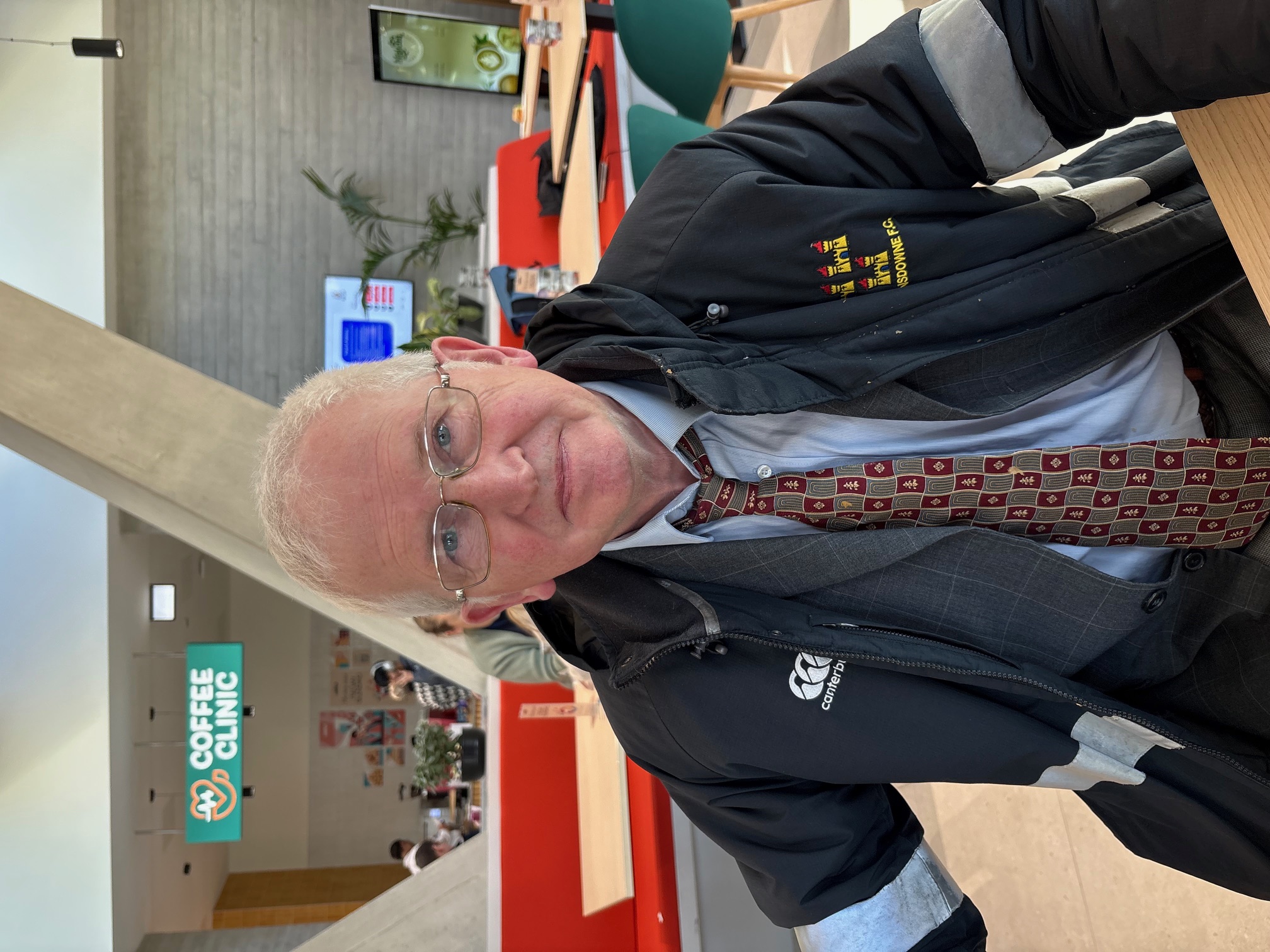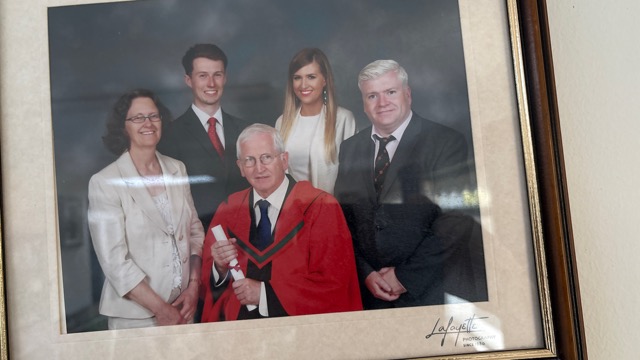
Author Interview with Prof. William Tormey
Author of the book: "All politics and economics ultimately impact on the Emergency Department: Ireland"
1. Please introduce yourself. What would you like your reader to know about you?
- I am a retired chemical pathologist with a deep interest in the details of population lifestyles within the context of the daily struggle for survival across society. Access to services to deal with specialist services provided by state and private agencies differ in separate polities. Measuring outcomes in all health related services are important to direct the most appropriate choice of methodologies across each specialist area of health related activities. The interaction of patients, their families and professional services are central to effective responses to the broad range of human experiences. I have had an interest in political details for as long as I remember. I recall the 1956 Hungarian revolution with the arrival of some Hungarian refugees into my local area in Dublin. I also remember the impact of the election of John F Kennedy to the US Presidency on the self esteem of the Irish people. I saw the late President in person in Galway during his visit to Ireland. I remember the Cuban missile crisis when iodine tablets were issued to the people as a counter to Atomic bomb radiation - such innocence at the time! I remember Moshe Dayan and the 6 day war in 1967. I remember the introduction of free secondary education in 1966 by Donagh O'Malley as minister for Education. This was a huge intervention to change the social situation from 1940 when primary school was the sole source of education for 90% of the population in the Free state.
I remember the Prague Spring of 1968 and Alexander Dubcek. I remember the Irish entry into the EEC which was responsible for the greatest leap forward in Irish History, I remember the crowds of passengers on trains shunting into a siding in Dun Laoghaire harbour to disgorge the passengers most of whom carried a brown suitcase bound together by a leather belt on a one way ticket to a job in England and a life of exile. Similarly I was brought to Rinanna (SHANNON) airport in west Clare when thousands of migrants headed to New York, Boston, Chicago and Philadelphia. The returned Yank was a real feature of life in the west of Ireland. Politics was a two and half party system during most of that time - Fianna Fail, Fine Gael and Labour and the civil war was part of the political undergrowth as was various border and other campaigns by Sinn Fein and the IRA at the time.
Free Trade agreements within the EU and with the British have had a hugely positive outcome in the southern state. The 1965 Anglo Irish Freetrade agreement was the culmination of agreements dated 1938, 19548 and 1960. The Anglo-Irish Agreement of 1985 gave the Dublin government a consultative role in Northern Ireland affairs.
The Belfast Agreement of 1998 was a landmark peace settlement with Political power sharing, cross border co-operation and protection for civil and cultural rights. It has been a huge boon to normalise ordinary life in Ireland. The broadsheet newspapers and journalism in general provided templates for contemporary history. Sport is a societal obsession which meanders through fashions with the big beasts football, Gaa football and hurling, rugby, horses in general, continuing their dominance. Athletics is also an important participation sport and the impact of immigrants on breaking national records is noteworthy. Middle distance runners are especially noteworthy - Ronnie Delany who died in 2026 aged 91 won the 1500m in the Melbourne Olympics in 1956 and is still lauded, Eamonn Coghlan, Frank O'Mara, Sonya O'Sullivan, Radisat AdeleckiI and many others. The sociology of sports reflects life in a sport obsessed country but this is another huge subject which deserves its own analysis. There are many specialist books published on the subject over the past 30 years.
2. What is your inspiration/motivation?
- A passion for the pursuit of fairness and better services for the people in Irish society and an examination of the underlying economic and cultural details in the economic and health areas on the island of Ireland which if amended could be of greater benefit to the people at large. What could the HSE learn from the Private Sector - Blackrock Health Group in terms of hospital development and standards.
3. How long did it take to complete your book from the idea to publication?
- About 8 months doing some work on the book every day. Determination is an important ingredient when writing for a purpose.
4. What's the main message and idea of your book "All politics and economics ultimately impact on the Emergency Department: Ireland"?
- When the present systems are analysed, it is clear that nationalising the current services will lead to inefficiencies and a reduction in the overall services available to the public. It is true that the Emergency Medicine services are the recipients of people with physical and mental ailments when more conventional services are off-line. Having primary care services adjacent to A&E departments is one reform that would be immediately beneficial.
5. What was the most unexpected conclusion you came up with while preparing "All politics and economics ultimately impact on the Emergency Department: Ireland"?
-I was surprised how the impact of economic development and social organisation caused medical effects in public health that forced the population to seek help and services in Emergency Departments because the ED was available to all comers round the clock irrespective of their ailments.
6. How would you describe your publishing experience with Eliva Press in a few words?
-Very satisfactory through the editorial process. I have used Eliva Press twice in the past four years and would do so again for public health and political areas. And I intend to do so.
7. How do you hope readers—especially researchers and students—will use your book in their work or studies?
-Researchers and students can use this book as a foundation or template to direct investigative efforts to guide changes in many areas of public health and politics in their own countries.
8. What future research topics or projects are you planning to explore next?
-I would like to reanalyse the efficiency and performance of the private sector in comparison to the major public hospitals with a view ro importation of the ethos of the private hospitals.
My other interest is to analyse the physiology of hyponatremia and the role of idiogenic osmoles in the control of cell size to better understand the control of cell size especially in the brain.