

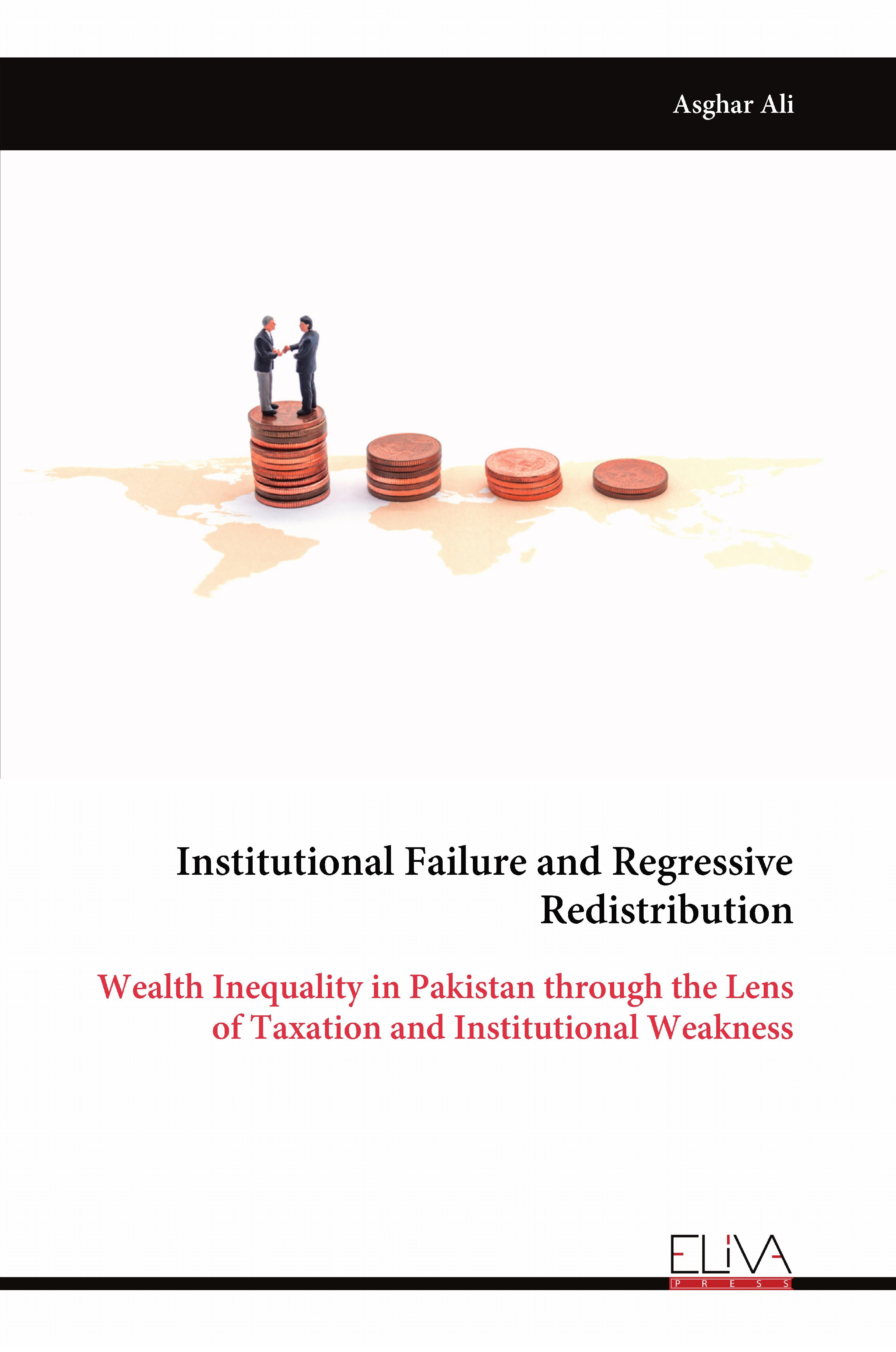
Institutional Failure and Regressive Redistribution
€ 45.5
Descripción
Institutional Failure and Regressive Redistribution examines the persistent challenge of wealth inequality in Pakistan through the interconnected lenses of taxation, institutions, and economic governance. The book explores how weaknesses in institutional capacity, tax administration, policy implementation, and governance can contribute to an unequal distribution of economic resources and opportunities. Drawing on economic literature, policy evidence, and analysis of Pakistan’s fiscal and institutional landscape, the study examines the structural factors that shape redistribution and asks whether the country’s taxation system effectively addresses inequality or reinforces existing disparities. Particular attention is given to the relationship between taxation, institutional weakness, fiscal capacity, and the concentration of wealth and economic power. The book argues that reducing inequality requires more than changes in tax rates. It requires stronger institutions, greater accountability, improved tax compliance, fairer fiscal policies, and effective governance. By connecting taxation with broader institutional and developmental challenges, this work offers an accessible academic perspective on one of Pakistan’s most significant economic and social issues. This book is intended for students, researchers, policymakers, development practitioners, and readers interested in Pakistan’s economy, public finance, taxation, institutional development, and economic inequality.