

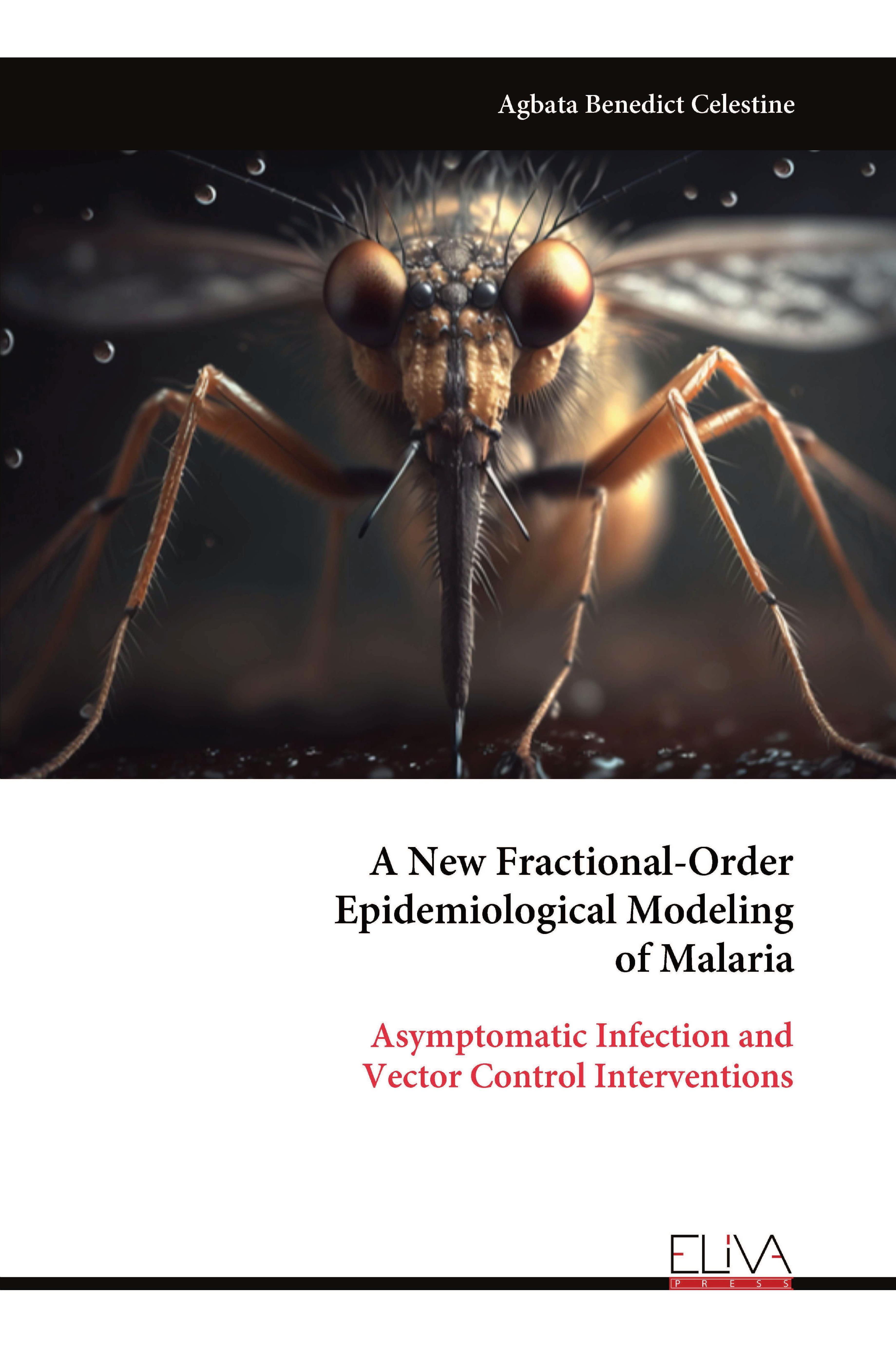
A New Fractional-Order Epidemiological Modeling of Malaria
€ 45.5
Descripción
Malaria remains a leading cause of morbidity and mortality worldwide, especially in endemic regions where human–vector interactions drive transmission. To capture the memory-dependent dynamics that traditional integer-order models overlook, we present a fractional-order malaria model using the Caputo, Caputo–Fabrizio, and Atangana–Baleanu derivatives. The model was solved numerically with the fractional Adams–Bashforth predictor–corrector method, and simulations were performed to evaluate disease dynamics under varying conditions. Simulations carried out on the effects of fractional order and treatment rate on the basic reproduction number (R0) and compartmental population changes showed that decreasing the fractional order (from 0.9 to 0.5) reduces the basic reproduction number R0 and lowers infection levels, suggesting that stronger memory effects attenuate transmission potential. Conversely, increasing the treatment rate for asymptomatic individuals (from 0.05 to 0.25) significantly decreases both asymptomatic and symptomatic cases, shortens the epidemic duration, and improves recovery outcomes. These findings revealed that fractional-order models provide a more realistic representation of malaria dynamics by incorporating memory effects and highlighting the role of asymptomatic carriers. Strengthening early treatment of asymptomatic infections through improved diagnostics, alongside sustained vector-control measures such as insecticide-treated nets and larviciding, is recommended.