

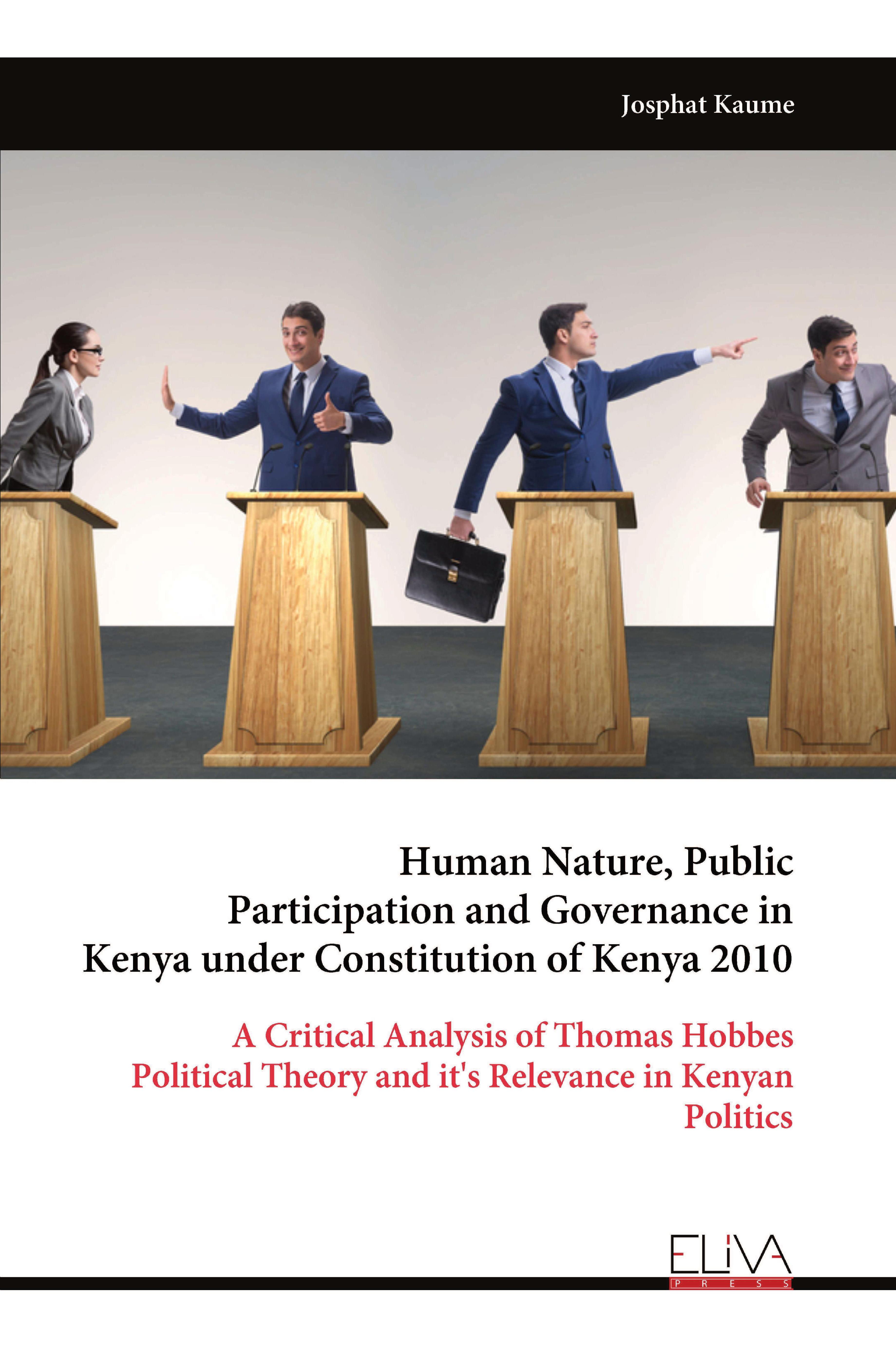
Human Nature, Public Participation and Governance in Kenya under Constitution of Kenya 2010
€ 45.5
Descripción
Dejar revisión
Descripción
Public Participation, Human Nature, and Accountability in the Kenyan Constitution: A Philosophical Alignment.
The Constitution of Kenya, 2010 reflects a nuanced understanding of human nature that resonates with classical political philosophy. In line with Hobbes, it assumes that unchecked power, rooted in self-interest, tends toward abuse and therefore requires firm legal and institutional restraints. Echoing Aquinas, the Constitution affirms that law derives its legitimacy from the common good and must be guided by moral reason rather than personal will.
Through entrenched public participation under Article 10, the Constitution aligns with Locke’s doctrine of popular sovereignty and consent, grounding political authority in the will of the people. Simultaneously, its commitment to participatory governance mirrors Rousseau’s vision of collective self-rule, where civic engagement mitigates domination by elites.
Accountability mechanisms within the Constitution thus operate as a synthesis of these traditions, transforming philosophical insights on human nature into practical safeguards for effective governance. Rather than presuming virtuous leaders, the Kenyan constitutional order institutionalizes participation and accountability as rational responses to human imperfection and as foundations of legitimate and effective governance.